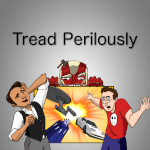
The Best Movies Never Made: Brometheus

Director
Ridley Scott

Writer
Ridley Scott, Damon Lindelof, and Jeff Probst

Starring
Josh Brolin, Pierce Brosnan, Emily Browning, Brock Lesnar

Synopsis
A hovering spacecraft that looks almost exactly like a luxury Hummer leaves Earth. A single humanoid alien (Brock Lesnar) wearing big shorts, an open shirt, and a backwards baseball cap pounds from a beer bong and totally barfs into the primordial soup. Then, like, some science shit happens or whatever.

Like a million years later, a pair of archaeologists (Josh Brolin and Emily Browning) find writing in various cave paintings all over the world, but mostly in places like Fort Lauderdale and Ibiza. They determine that these are advertisements for Axe Body Spray created tens of thousands of years before that product was ever invented. After huffing three barrels of Axe, they figure out a map to a distant planet.

Using a gross old rich guy (Rico Rodriguez) they assemble a team of guys who claim to be scientists but turn out to be that year’s pledge class of Phi Zeta. They have to go on a space mission to get in, so they blast off in the U.S.S. Cabo, a spaceship/pool party/dance club, for a distant planet.. They pretty much instantly turn out to be completely incompetent at their jobs, fundamentally misunderstanding not only the particulars of their alleged specialties but science itself as a heuristic.

They land on a barren, rocky planet. The entire crew is instantly depressed that it isn’t the nonstop party that was described in the cave paintings. They explore the ruins of the ancient civilization, marveling at highly advanced gymnasia, sports bars, and Abercrombie and Fitch outlets. Unfortunately, because most of the crew are men, the alien ruins decide they are fucking up the ratio, and sets about destroying them. The men don’t help their cause by instantly getting drunk and attempting to chug or fuck the variety of goo or monsters the planet jizzes at them.

For no reason ever explained in the script, the ship’s mandroid, Brobot (Pierce Brosnan), rufies the lead archaeologist and the planet totally date rapes her. None of the ship’s medical devices are equipped for treating women because no homo, am I right? She has a giant monster baby called the Broliath.

Brobot and the gross old rich guy (on the ship for no adequately explained reason), wake the final alien, known as the Mengineer (Brock Lesnar). Things are going well until Brobot implies that the Mengineer looks a little gay in his board shorts and no shirt. The Mengineer just goes nuts on everyone. He has an showdown with the Broliath, and both are killed.

Brobot and the surviving female archaeolgist fly off into space.

Trivia
Rico Rodriguez, chiefly known for his role as a child on Modern Family, performed the part of Gross Old Rich Guy in extensive old age makeup. Though his character is never shown young (and thus out of makeup), the director reportedly called old people “gross” and insisted on a child actor.

Though there are several female characters, none of them are ever identified by name.

The phrase “no homo” appears 634 times in the script.

The filmmakers wanted Matthew McConaughey to portray both the Mengineers and himself in a bizarre dual role, but scheduling proved impossible.

There were so many high fives exchanged in various scenes in the film, both Josh Brolin and Pierce Brosnan had to get palm transplant surgery.

The little red cups the Mengineers drink from resemble the commercially available beverage cup, but are in fact replicas costing five hundred dollars each.

The beer on the ship was real, and the director encouraged the cast to drink even when not on camera. Because of the drinking, Emily Browning had to have her stomach pumped, Josh Brolin married a local stripper, and Pierce Brosnan got a butterfly tattooed on the small of his back.

The dialogue for this film is nearly identical to Prometheus, but translated for bros by noted manthropologist Dr. Leonard “Broadzilla” Thorson.

Goofs
Factual error (possibly deliberate error by filmmakers): The sky isn’t constant. A star map would not still work thousands of years after it was originally made.

Boom mic visible: During the “Mengineers Gone Wild” scene

Factual error (possibly deliberate error by filmmakers): Science is in no way faith-based.

Factual error (possibly deliberate error by filmmakers): The archaeologists don’t seem to understand their field of study exclusively focuses on dead things.

Errors in geography: Santa Monica is not Downtown.

Plot holes: Please see related page for a full list of plot holes

Memorable Quotes
Female Archaeologist: You’re wasted. This place isn’t awesome like we thought. Charlie barfed all those shots. We gotta get to Havasu!
Gross Old Rich Guy: And would Charlie want you to bitch out? You wanna leave before Happy Hour? Or have you lost your roll?

Gross Old Rich Guy’s Daughter: If you’re really going down there, you’re gonna yak.
Gross Old Rich Guy: Is there sand in your vagina? Haters gonna hate.
Gross Old Rich Guy’s Daughter: Did you think I was gonna do all your work while you went on spring break without me? Presidents graduate or flunk out.

Gross Old Rich Guy (on recording): ‘Sup, bros and hos. I am the man. It’s, like, June or something and I think it’s 2090. Wait, 2091? Are you sure, Hoagie? Whatever. If you’re watching this, you don’t know that Oona Chaplin totally showed her boobs on Game of Thrones last week, which is an awesome show, even though it has elves and D&D and shit. Epic. Also, I’m dead. May I rest in peace. (pauses) It’s so sad I’m dead. (wipes away tears) I was always the best, you know? If you were too drunk to drive, I’d put you in a cab. I’d always take you to Cabo (no homo). I was awesome. I used to always play that DMB song. Remember that? (sings “Crash Into Me” badly. Gets really into it).

(stops crying, turns serious) So, anyway, there’s this totally chill bro with you. Brobot, stand up and show them guns. Anyway, Brobot is my bro, and a clutch dude. He will never get old and gross like me. Brobot doesn’t understand how awesome he is, because he has no heart.

When I wasn’t up at Vail shredding fresh powder or banging drunk chicks in Fort Lauderdale, I thought bout some deep shit. What happens after Spring Break? Is there a Havasu, like, after this one? Anyway, these other two bros, even though one is a chick, are here to figure that out. (gestures at archaeologists) These two are are the man, even though one is a chick, like I said.

The Titan Brometheus wanted bros to be as awesome as gods, so he brought us beer pong and Funyuns, and he got put on academic probation for it. It’s time that motherfucker graduates.

Selected Reviews
“Shows a fundamental misunderstanding of the scientific method. But at least has a better command of it than Prometheus.” — Stephen Hawking

“Phi Zeta!” — the actual Phi Zeta pledge class

“Huh?” — Richard Roeper

Thanks to Clint. The title came from him during a fast and furious volley of bro-puns we were throwing back and forth. Or check out another one of the Best Movies Never Made.

Posted in Moment of Excellence, Projected Pixels and Emulsion | Tagged , , , , , | 1 Comment

Food & Wine Thursdays: Confirmation Bias

Every once in a while I re-subscribe to Wine Spectator for the sole purpose of making sure my United Airlines miles don’t expire. The venerable Speculator has been saying some interesting things in its editorials recently. Their columnists, principally James Laube and Matt Kramer, write like they’re just on the verge of acknowledging that the 2013 wine market is radically different than that of the 1990s only to pull the rug out at the last minute.

In the most recent issue, for instance, Kramer rightfully acknowledges that a more affluent Generation X and the more wine-oriented Millennials are both good things for the wine market but seems convinced that these buyers are going to eventually turn to triple digit trophy wines in the same way as their overcompensating parents. Will they turn away from cheap wine in favor of fine wine? Sure. But those fine wines will be those amazing $30, $40, $50 bottles, not $500 bottle Bordeaux. Kramer either sloppily conflates or deftly sidesteps that distinction.

But enough about Kramer who is, I believe, the only writer at Wine Spectator who is fighting the good fight, and lets turn instead to their resident silver fox, James Laube.

Hey girl. You want to hop on my Harley and take a trip up to a Vermont B&B?

A couple issues back, Laube wrote an editorial about his magazine’s self-described vaunted blind-tasting protocol. How Wine Spectator rates wine is inherently superior to most other publications because all of their tasting is done without knowing a wine’s producer and it is down in a controlled tasting environment in their offices rather than on the grounds of the winery. According to Laube, this prevents “confirmation bias,” which he then describes (in a way that suggests he just looked it up himself) as the tendency of people to favor information that confirms their beliefs.

I’ve always been confused by Wine Spectator’s blind tasting system and how a true blind tasting could routinely result in the same wine regions–Napa, Sonoma, Bordeaux, Burgundy, Tuscany, and Piedmont–as the only regions whose wines routinely are awarded point scores in the 95+ point upper echelon. There are, of course, exceptions, but they are rare.

But in his article, Laube peels back the curtain just a little bit. Wine Spectator‘s tastings are blind only inasmuch as the producers, and virtually nothing else, are unknown. Region, vintage, varietals, are all known to the tasters. In short, they are just as easily susceptible to confirmation bias, only on a broader level.

Obviously you can’t have a fully blind tasting. Blind tasting Cabernet Franc against Pinot Noir or Riesling against Sauvignon Blanc is pointless, but why not blind taste all the Pinots against each other, regardless of region? Where is the harm in that? It was that type of mostly blind tasting in Paris in 1976 that first thrust California wine into the international spotlight. How soon we forget.

The inherent confirmation bias in Wine Spectator’s methodology is apparent in another Laube-penned article, his profile of Mendocino County’s Anderson Valley. Anderson Valley has long been one of my favorite wine regions in California, having discovered the region not because of its wine but because of its beer, with the wine as a pleasant surprise. After what was a very good, thorough, and engaging article on the history of this important region, Laube was overall dismissive of the region’s viability as a world-class wine region, with exception of its Pinot Noir, and the scores reflected that perception.  His reasons? Not many stated other than the region’s climate variability.

So if Laube is going into a blind tasting of Anderson Valley wines with the belief that the Anderson Valley doesn’t produce world class wines other than Pinot Noir, how are we to believe that his scoring isn’t also tainted by confirmation bias?

I suppose you could argue that it was his thorough tasting of the wines from the Valley for this feature that formed that opinion, but if after 30 years writing about wine this was his first foray into a comprehensive tasting of Anderson Valley wines, that would make him a pretty shitty wine journalist.

And even I’ll give a Wine Spectator writer more credit than that and just chalk it up to confirmation bias.

I’d provide links to the articles cited, but Wine Spectator keeps almost everything behind a pay wall and makes you pay for an online subscription even if you have a print subscription. If you want to read the articles, you might check the restroom at your friendly neighborhood wine shop.

Posted in I'm Just Sayin, Wine & Cheese | Tagged , , , , , , | Leave a comment

Service Update: Tumblr

We’re also on the tumblr now, for plenty of reblog action.

http://thesatelliteshow.tumblr.com/

Posted in Puffery | Tagged , , | Leave a comment

Special Review Unit: Season 14

Scene Depicted Does Occur in Season.

Scene Depicted Does Not Occur in Season.

Like any long running show, Law & Order: Special Victims Unit hit a rough patch four or five years back. As I discussed with David, this coincided (more or less) with the departure of Diane Neal as ADA Casey Novak. The balance shifted from psychotic children and human trafficking to the detectives’ personal lives and Captain Cragen often getting suspended for the team’s shenanigans. The stories tended to be stale with no batshit crazy-go-nuts episodes that informed the earlier years. The metaphor had been beaten by an image that denotes age.

On the show, this loss of direction was evident by the its inability to find a permanent replacement for Novak — eventually the problem becoming an in-story punchline. Actors like Michaela McManus, Harry Connick Jr., Melissa Sagemiller, Christine Lahti and even Stephanie March and Diane Neal reprising their roles couldn’t get traction with the courtroom portion of the show.

Well, except for one all-too brief moment when the show blazed red-hot again:

She should've been a regular.

She should’ve been a regular.

Then came the departures. Tamara Tunie as ME Warner went from being a regular back to recurring. B.D. Wong left the show to become a FBI psychologist on another show on another network. The biggest of these losses, of course, was Christopher Meloni and his Elliot Stabler.

While the Law & Order format is fairly resilient to actor turnover, SVU was generally regarded as the exception. Meloni and co-start Mariska Hargitay were able to use the audience’s affection for Stabler and Benson to strong-arm notoriously cheap creator Dick Wolf into better paydays every time their contracts came up for renewal. This time,  though … who knows, maybe Meloni noticed how often they were making the same five episodes and thought it was time to move on? Better pay and new material on a vampire show? Yeah, I guess I’d make that move, too.

Wolf responded by hiring two new actors onto the show and utilizing Linus Roache’s ADA Michael Cutter from the Original Recipe to keep the show from hemorrhaging fans. He also came to an agreement with Hargitay, allowing her to appear in 13 episodes.

The gambit worked as the show is still on the air when all other Law & Order programs died away.

I have no idea how well this worked out from a story perspective because I’ve only watched the first episode of season 13 to learn how they dealt with Stabler’s departure. I let the rest go assuming that this would soon be the end. My review unit column was done, revealing the best, worst,  and some contenders to the throne. Why would I need more SVU?

And then I innocently watched a recent episode called “Legitimate Rape” and it all came around. The episode concerns a female sportscaster assaulted by her cameraman (played by David Marciano, you might remember him as the slimy Billings on The Shield). Over the course of the episode, the cameraman uses his understanding of the legal system to destroy her and get partial custody of the child that was conceived during the attack. Forced to hand over the child, the sportscaster flees to Canada with the help of Olivia Benson. In the last seconds of the episode, I realized the writing staff tricked me into liking an episode in which Olivia breaks the rules because she’s a product of rape herself.

That is nothing short of actual magic.

And show some respect for it, muggles.

And show some respect for it, muggles.

If you’ve been through the Bottom Five, you know my thoughts on episodes that feature A.) Olivia breaking the rules and B.) using her past as a justification. For once, someone on SVU found a way to make it work. Seeing that, I figured something must have changed and opened a Hulu Plus account to get caught up on the current season.

I’m not sure who came from where and who’s writing what, but it seems with the implosion  of the Law & Order brand, the best minds from the other shows converged on the last show standing and rethought how to make it.

Like the short-lived Los Angeles, the show now features a free mixture of Original Recipe, Criminal Intent (episodes now occasionally feature scenes from the perp’s point of view) and the character-based connections of SVU. It helps as the format now has room to stretch as the plot demands. Where a recent psychotic kid episode could’ve come straight from season 4, a subsequent episode in which an Afghanistan vet has PTSD induced flashbacks actually makes fine use of the flashback trope that would normally break an episode.

In replacing Stabler, Wolf found actor Danny Pino. I have no idea if he had a rough first year, but his Detective Nick Amaro is quite likable enough now, showing a lot of the same dedication as a character that Stabler possessed. Wolf also hired Kelly Giddish in anticipation of replacing Hargitay and I’m actually impressed with her as an actor and the character, Detective Amanda Rollins. She has a few reoccurring problems, a gambling debt and a crazy sister, but they’ve been utilized to good effect. The crazy sister even lead to an Internal Affairs episode that didn’t suck.

It’s almost like the writers took my Bottom Five as a challenge. If they deliver a good countdown episode, I’ll buy them some steaks.

The show also found a solid ADA in the form of Rafael Barba, played by Raúl Esparza. He’s kind of shifty, like Cutter or Carver from Criminal Intent , he finds amazing loopholes to get what he wants, like Cabot, he’s even kind of a hardass like McCoy. One episode even features an amazing callback to the Original Recipe as Sparza charges a school with conspiracy in order to ferret out some rapists.

Really, what SVU has managed to do this year is prepare for the inevitable departure of Mariska Hargitay. Though she returned to full-time status this year, nothing lasts forever. It seems that Wolf and his team  accept that reality now and made SVU respond to that greatest of threats. It now stands as a viable program for, at least, another few years. While we’re just talking about a silly, often overwrought network television cop drama, it’s admirable to see a production regroup in the face of cast turnover and the realities of a shifting TV marketplace. Companies and organizations of all stripes fail to pivot as successfully and perhaps there is something of value in the example.

Also, that psychotic kid episode from this season was the bee’s proverbial knees.

Lesson Learned: Any show can resuscitate itself with the right mix of new characters, new writers, and a very old format.

Posted in Projected Pixels and Emulsion | Tagged , , , , , | Leave a comment

Bo Knows Yakmala

That is an undoctored photo of Megatron’s anus. True story.

The wonderfully misguided 2004 revenge flick Paparazzi was one of those movies I’ve backed for official Yakmala status for a long time. It’s time to make my case with a whole lot of outdated references to a defunct ad campaign.

Tagline: One good shot deserves another

More Accurate Tagline: Bo knows homicide

Guilty Party: The creative team behind Paparazzi sounds made up. The director, Paul Abascal, is a former hairstylist making his debut as a feature film director. Before this, the only cinematic crime on his record was Mel Gibson’s mullet in Lethal Weapon 3. The writer, Forry Smith, has written one thing. This. So who would have the hubris to grab a first-time writer in one hand, and the guy who made his hair look like a cautionary tale on the dangers of Whitesnake addiction? Mel Gibson! Everyone’s favorite drunk, anti-semitic uncle decided to draw upon his deep and abiding love of Christ’s teachings, and give us a revenge flick we could all relate to. You know, if we were rich and famous movie stars.

Synopsis: Bo Laramie (Cole Hauser) is a newly minted action star. He also has a perfect family: married to Abby, his sweetheart from back home (a nearly comatose Robin Tunney) with a little Aryan moppet named Zach. Bo has it all. He’s also awesome, because he hasn’t let the fame go to his head. Bo knows humility.

He gets his first bitter taste of fame when a woman asks him to sign the cover of the National Inquirer stand-in, the eponymous Paparazzi. That’s a bit like calling a book “Novelist” but whatever. Shortly afterwards at Zach’s soccer game, sleazy paparazzo Rex Harper (a supremely sweaty Tom Sizemore) snaps pictures of the boy. Bo asks him to stop, and though Rex initially complies, he’s back at it later. Bo decks him, and Rex reveals his equally sweaty partners were filming the whole thing. Rex proceeds to sue the living shit out of Bo. Bo knows litigation.

Bo pays up and goes to anger management, but also tells his side of the story on Access Hollywood. This enrages Rex, who pledges to destroy Bo. He gathers his crew together, including Wendell Stokes (Daniel Baldwin, perpetually looking like he just ate a big bowl of chili), Leonard Clark (British), and Kevin Rosner (a biker for some reason), to get some payback. Rex, while on a date because we need a convenient third act witness, causes Bo to get into a bad accident. He then proceeds to take pictures of the horribly injured bodies of Bo, Abby, and Zach. Bo is a little banged up, Abby is badly hurt but conscious, and Zach is in a coma. Bo knows trauma.

Detective Burton (Dennis Farina) is on the case. The paparazzi spin a fake story about happening upon the accident, and Rex keeps his date quiet with a little rape and blackmail, just in case you were worried about nuance. While Bo innocently comforts the local grocery store girl over Zach’s coma, Kevin the biker gets a shot of it. Bo freaks out, and then accidentally runs Kevin off the road. He makes an effort to rescue the guy, but Kevin’s evil can’t be turned off by something as petty as staying alive. He shit-talks Bo in the middle of the rescue, leading to Bo dropping Kevin off a goddamn cliff. Bo knows gravity.

Detective Burton gives Bo the rundown on what scumbags these paparazzi are. Leonard would be a disgraced lawyer if he had the capacity to feel shame, while Rex is an accused rapist. Burton also warns Bo that he shouldn’t use a cell phone, since it’s easy to listen in. Armed with this knowledge (and information on Leonard’s past illegal weapons charges), Bo lures Leonard to the set, plants a prop gun on him, and calls the cops. Leonard foolishly investigates what the gun-shaped bulge in his jacket is while a bunch of cops have him dead to rights. Bo knows subtlety.

Rex and Wendell (panicking at the recent deaths of Kevin and Leonard) break into Bo’s place to plant cameras, only to catch Abby at home. Wendell beats up Abby and threatens Zach. After that, the cops park outside Bo’s place, forcing Bo to concoct a pointlessly elaborate way to get out. He then beats Wendell to death with a baseball bat and sneaks home. Bo knows justice.

Detective Farina suddenly remembers that red light cameras exist, and gets an image of Rex’s date. She immediately sells Rex out as having caused the accident. When Burton dispatches cops to Rex and Wendell’s homes, he finds out they’re already en route, sent by anonymous calls. Rex discovers Wendell’s corpse on the guy’s floor, and breaks in to smell him or something. He returns home to find blood and the bat planted there (and has just placed his own blood and fingerprints at Wendell’s place), and flees a few moments before the police arrive. He goes to Bo’s house, where the movie star proceeds to beat him mercilessly. Burton arrives and arrests Rex. The paparazzo is taken out in cuffs while other paparazzi get pictures of his bloody face. Bo knows irony.

Life-Changing Subtext: Celebrities are like normal people, except they can murder whoever they like.

Defining Quote: Rex: “Laramie, I’m going to destroy your life and eat your soul. And I can’t. Wait. To do it.” He makes this pledge while watching Access Hollywood, before shit has gotten even remotely real. Rex has all the nuance of a chimpanzee smelling his own ass.

Standout Performance: This film has a quartet of bizarre cameos no doubt roped in by (at that time) Gibson’s solid reputation. Gibson himself, in an unintentionally revealing choice, plays a patient in the therapist’s waiting room where Bo must unfairly receive anger management treatment. Vince Vaughn, sporting a biker mustache, grills Bo about rumors of penile enlargement. Chris Rock plays a thrilled pizza delivery guy who politely requests some “fine bitches” from Bo. And lastly, Matthew McConaughey plays himself, because you really can’t trust him to do anything else.

What’s Wrong: To make a revenge movie palatable it needs two things: crimes commensurate to the hero’s righteous fury and a star with enough charisma to keep the audience on his side. No matter how cartoonishly evil the paparazzi become, they never tip over the balance into out-and-out monsters. And, this bears repeating, Bo beats one to death with a baseball bat.

On the second point, George Clooney, Tom Cruise, Kurt Russell, and Vince Vaughn were all asked to play Bo (probably in that order). No one wanted anywhere near this script, except Vaughn, who I’m assuming was paid in Rogaine and Cheetohs. They were forced to settle for the reptilian Cole Hauser. With that guy’s toxic anti-charisma, it’s a good thing he didn’t play Private Ryan or all of America would have cheered for Hitler.

Flash of Competence: A modern, slickly-made, and high-budget film, Paparazzi rarely drags.

Best Scenes: Right after Bo attends the premiere of his new action blockbuster Adrenaline Force (apparently, Bo is making movies in 1986 or something), he runs along the beach in Malibu. In the film’s first bizarre miscalculation, Bo slips into amazed voiceover. This is the only instance of voiceover in the entire film. It comes out of nowhere, heralding its arrival with a gobsmacked “Whew!” like Cole Hauser had to first beat the voiceover at tennis before recording it. There’s a weird little coda about how “primitive tribes” (which to Gibson probably means Methodists) believe the camera steals your soul. This places the blame squarely on the paparazzi for any horrible thing Bo will do. “Hey, you didn’t want me to bat-rape you? Shouldn’t have taken that photo, chuckles!” And in case you’re wondering, the voiceover never returns.

The plan to kill Leonard Clark is actually pretty good. Bo cleverly uses some information imparted in the previous scene (the bad guys can listen in on cell phone calls), plants a weapon on a guy with a gun charge, then calls the cops. You could say there was no way he could have guessed Clark would be dumb enough to pull that gun-shaped thing out of his pocket while all the LAPD had weapons trained on him, but it’s possible Bo only wanted to get the guy busted and was pleasantly surprised. Anyway, good job, movie.

Bo’s plan to break out of his house falls on the other end of the spectrum. He calls a pizza delivery guy (Chris Rock, who overplays the whole scene, acting like he got invited to Jesus Christ’s pad), and then hides in the guy’s trunk to get past the police watching the house. How does he get out of the trunk without the driver noticing or pulling over? Never shown. He does, going to a car stashed in the woods, which is also never established. Later, he has to sneak back in, which he does through the back of the property. So… why didn’t he do that the night before? Maybe that motherfucker really wanted pizza.

Transcendent Moment: In the end, Detective Burton loads a bloody and beaten Rex Harper into his police car, ready to cart him off to jail on Wendell Stokes’s murder. As he does, he looks back up at Bo, and a tiny smile plays on Burton’s lips. He knows. He fucking knows Bo was involved in three murders and a frame job. He even has solid evidence to tie Bo to the scene of Kevin’s crash. But he doesn’t say anything, because Bo is a celebrity, and they’re totally allowed to do this.

“It’s okay. I was in Naked Gun.”

Paparazzi is the wonderful fallout of sheltered, entitled people trying to air their problems to the world. And these aren’t even First World Problems — these are something far beyond that. Something called Yakmala.

For the film that coined the phrase “Yakmala,” check out my review of Gykmata. Or check out another view of the press.

Posted in Projected Pixels and Emulsion, Yakmala! | Tagged , , , , , , | Leave a comment

Now Fear This: The Thin Blue Line

Run! The eyes will get you!

I’m breaking a few rules with this week’s Now Fear This. The goal with this feature was to highlight relatively unknown films that, while not classics, are much better than their nonexistent reputations might indicate. This week’s pick, The Thin Blue Line is a legitimate classic. A landmark documentary, it’s the movie that announced to the world that Errol Morris was a filmmaker who would need to be watched closely, lest he subvert every last convention of the genre and simultaneously blow every mind in the theater with his keen understanding of the human condition. The reason it’s showing up here, where I mostly discuss horror films, is that The Thin Blue Line can be appreciated as one of the more terrifying horror movies ever made.

In a decision that jibes with its illustrious forward-thinking track record and in no way reveals them to be a bunch of narrow-minded Luddites, the Academy declined to nominate The Thin Blue Line as Best Documentary in 1989 for some of the same innovations that have made it a blueprint for films that came after. Specifically, Errol Morris used re-enactments and clips from other films to illuminate the testimony of his subjects, at the time a stunning advancement in the technique of documentary storytelling, which have since become the equivalent of the wrench in the documentarian’s toolbox. Though he had two prior films, the hilarious cult favorite Gates of Heaven and the bizarre Vernon, Florida, it was The Thin Blue Line that created the Errol Morris brand in the minds of most cinema nerds.

Not long ago, I had a conversation at a party with a friend about Morris. We’re both huge fans, and it was one of those debates where we were essentially only arguing the relative placement of greatness. He backed The Thin Blue Line both as Morris’s best film and the entry point into Morris’s oeuvre. Though I disagreed on the second point (Fast, Cheap, and Out-of-Control has a better range of subjects for the neophyte and I have a deep love for the gothic sleaze of Tabloid), it’s difficult to argue the first, especially because of all of Morris’s films, The Thin Blue Line has had the most concrete effect on the real world. It saved a man’s life.

On November 29, 1976, Dallas police officer Robert Wood was shot and killed at a traffic stop. Eager to make an arrest, the Dallas police located a resident of nearby Vidor, a juvenile delinquent named David Harris. He immediately fingered drifter Randall Adams for the crime. The cops collected some additional eyewitness testimony and built a case against Adams. Though it was a little shaky and Adams continually protested his innocence, he was sentenced to die.

Morris uses interviews with nearly everyone of significance in the case, including Adams, Harris, the Dallas police, several eyewitnesses, lawyers, and the judge to narrate each step of the story. He illuminates details of the crime with a detailed re-enactment, altering details as testimony changes between players and in some case as the players change their stories. It’s a fascinating visual device to illustrate the slippery nature of both truth and memory. Morris shows us the shooting as related by half a dozen people, the small details painting a picture that does not quite match.

One by one, Morris’s interviews pick each witness apart, exposing the inconsistencies and ulterior motives behind their testimony. Harris, who claims to have been in the car at the time of the shooting, has a long record of violent behavior and possible mental illness, and bragged to friends shortly after the crime about killing a cop. The eyewitnesses are far from reliable themselves. The most damaging testimony in the trial came from a married couple, who turn out to be a shady pair who allegedly told others they would be willing to say anything for the substantial reward money offered. The man later says he saw nothing, and the woman, a space cadet with delusions of Nancy Drew, just wanted to get involved. The partner of the officer killed told one story on the night of the murder and an entirely different one after being debriefed by Internal Affairs.

In the middle of everything is Randall Adams, stubbornly insisting on his innocence. His story, while strange to modern ears, lacks the holes marking the others. He claims to have run out of gas and was walking to a nearby station, which, I guess is something that used to happen. He was hitchhiking, something I have gone on record on as being a surefire ticket to an organ-harvesting, when Harris picked him up. Instead of going about the errand, exchanging a handshake and going their separate ways, Harris and Adams decided to hang out. They drank beer (despite Harris being sixteen at the time), and went to a drive in movie double bill that featured a softcore cheerleader movie. Am I crazy or does this sound like the set up to every horror film about overly-friendly drifters you’ve ever seen? Things start relatively normal, then they take a turn for the inappropriate, and pretty soon you’re running from some masked asshole with a chainsaw.

Not for Adams. He just got arrested for cop-killing in the execution-happy state of Texas.

It’s a more realistic end to the story, and a far more frightening one because of the feeling it could happen to anyone. Randall’s story about the frightening tactics employed by the Dallas police might have been shocking at the time, but after scandals like Rampart it’s easier to believe the police would do something like this just to close a case. The railroading continues with the testimony of Dr. James Grigson, a psychiatrist who has testified in more than a hundred death penalty trials and earned the nickname “Dr. Death” by recommending execution in nearly every one.

The film results in a stunning depiction of a system stacked to convict an innocent man almost solely on the testimony of a killer. If that’s not a chilling story, I don’t know what is.

I’ve broken the rules before with a profile of the romantic gem Joe Versus the Volcano. Clint talks about another legitimate classic, at least to me.

Posted in Projected Pixels and Emulsion | Tagged , , , , , | 2 Comments

Food & Wine Thursdays: The New Face of Natural Cali Wine

For far too long “natural,” in the context of wine, has been nearly synonymous with funky, earthy, so-called “terroir”-driven wines. The implication being that the presence of fruit flavor and aroma  is ancillary to these other flavors and aromas; by necessity, if a wine has an abundance of fruit it must have been excessively manipulated by the wine maker’s hand.

What this premise seems to forget is that wine is made from grapes which, last time I checked, are a fruit. They’re also a very sweet fruit and it is that sweetness coupled with a grape’s own natural preservatives that make grapes the ideal vehicle for fermentation. What this premise also forgets is that here in California we have very good soil, very even warm weather, and a generally very even-keeled growing season.

We also have more modern wineries that, through no deliberate action on the part of the wine maker, facilitate clean and consistent wine. The purpose of a wine maker’s manipulation is to either overcome/mask flaws or ensure consistency and it is those very flaws and variation which create much of the appeal for natural wine drinkers: the flaws are the “tell” that indicates the naturalness of the wine.

But should a wine maker be penalized for making his or wine in California with ripe fruit and modern equipment when his wine is otherwise naturally and authentically produced? Is the burden of great weather and equipment not tainted with centuries of Brettanomyces an inherent barrier to natural wine? Does a true “natural” California wine need to be of the luddite-sort advocated by wineries like Coturri?

I have the pleasure of working with Andrew Jones, the owner and wine maker at Field Recordings Winery. I have yet to meet another person as tied in to the land as Andrew, as his “day job” is that of a nurseryman, selling grapevines to growers throughout California and he knows California’s vineyards, growers, and vineyard managers intimately. Making his wine out of a newly-acquired industrial warehouse space just off US-101 in southern Paso Robles, all of his Field Recordings wines are single vineyard and naturally fermented with native yeast. Those wines that are not monovarietal are all co-fermented field blends and he bottles all of his wine without fining or filtration. His wine making is sulfur-free and he only adds a small amount of SO2 just prior to bottling to ensure stability. His wines typically end up at about 40ppm SO2, well below the EU organic threshold of 100ppm.

All sounds pretty good so far, right? Pretty much in line with all but the most aggressively anti-sulfur natural winos, no?

The problem is, Andrew makes his wine with Central Coast fruit and his red wines routinely top 15% ABV, despite picking his grapes at around 25 brix. As a Central Coast wine maker, he also prefers to use those varietals ideally suited to the climate, including Zinfandel, Petite Sirah, and Cabernet-based Bordeaux-style blends. Although he’s won plenty of natural wine converts, there is still a segment resistant to the idea of a natural wine that is so high in alcohol and/or so fruit forward.

Just as the 100-point Parker boom was fueled by California wine makers apeing the styles of classically prestigious wine regions of France and Italy (and then exaggerating it and re-exporting it back to the Old World) so too has the natural wine boomlet in California been fueled by an imitation of the traditional farm wines of Europe. But California is not Tuscany, nor is it Slavonia.

But California is its own entity and is just beginning to find a wine making-style to call its own. I’m excited by the young wine makers I’ve encountered in California who are producing quality wine straight from the vineyard that naturally expresses a sense of place that is truly Californian.

Posted in Armchair Philosophy, I'm Just Sayin, Wine & Cheese | Tagged , , , , , , | Leave a comment
